🔔 This page contains affiliate links and product references. As an Amazon Associate Hazard Sports will earn from qualifying purchases. This commission is at no extra cost to you. External links open in a new tab so you don’t lose your place. For more information visit our Legal and Privacy pages.
This Road Trip Preparation page is based on an accumulation of my riding experiences since 1994. Taking long trips on a motorcycle is something that I have always enjoyed. I am currently planning my first IBA SaddleSore 1000 - a documented 1,000-mile ride in 24 hours. I aim to complete this ride by the end of this October (2026). Prior to this, my longest ride was 800 miles in 24 hours, with a turnaround trip four days later for another 800 miles in 24 hours. This was not as difficult as I thought it would be. I may have been desensitized by my eight months of commuting to work on a motorcycle, averaging 3,200 miles per month over the span of two riding seasons in NY.
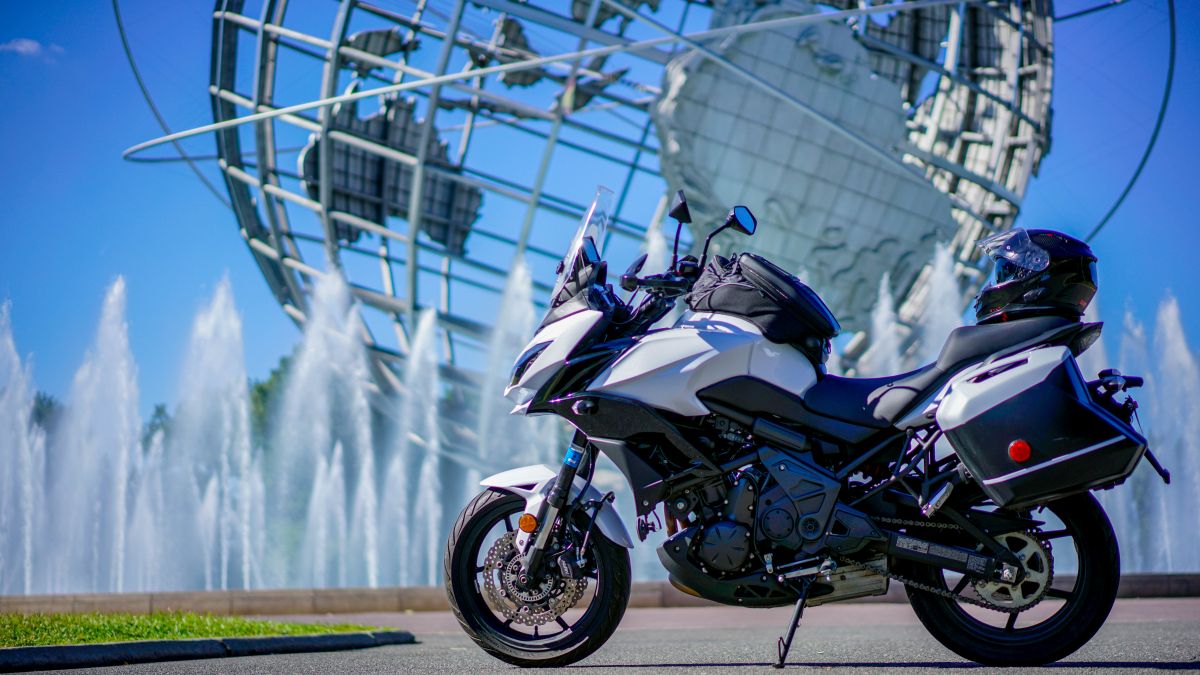
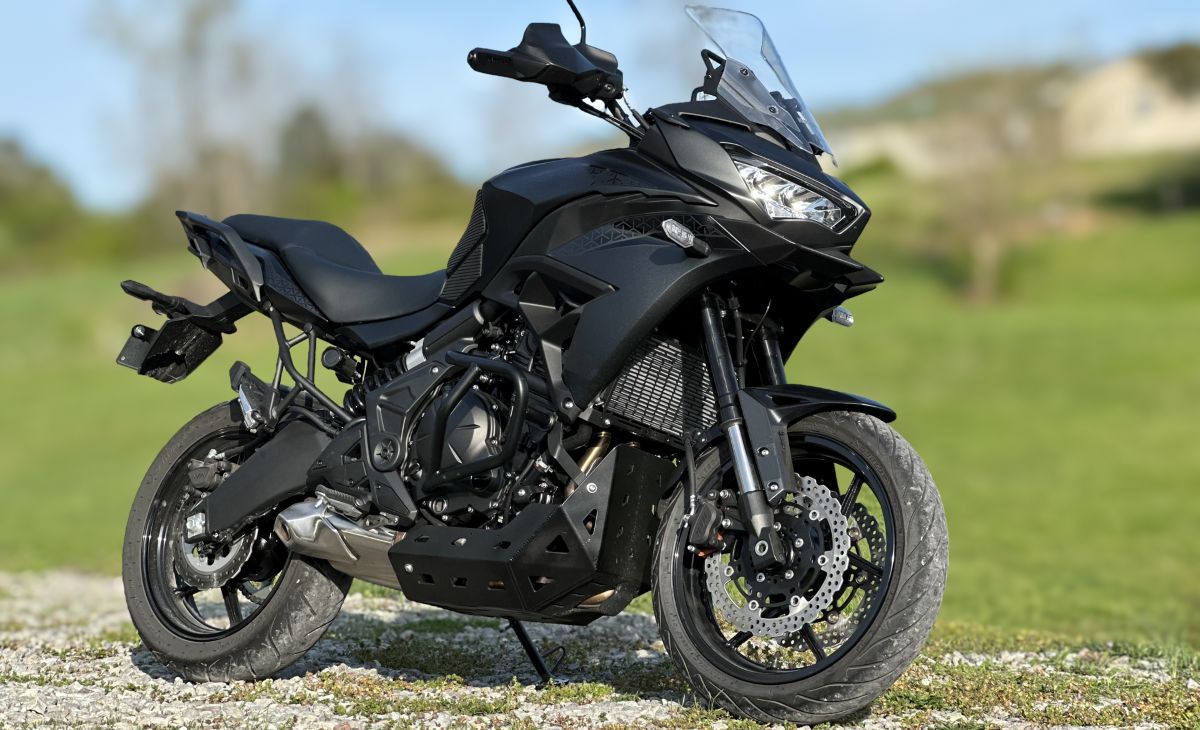
The white motorcycle above was my Versys 650 daily commuter that I codenamed "Puddle Jumper." The black Versys 650 pictured below, which I codenamed "Battle Bike," is what I have set up for the 1,000-mile challenge. This is fully prepped but in its "sporty" mode. No side cases or emergency kit. Just pure aesthetic:
The first and most important requirement for me is the emergency kit that I carry on every ride. Everything I need for the Triumph or the Kawasaki is packed in a Kriega OS-18 Adventure Pack. Definitely overkill for daily carry, but over the years I have learned to have peace of mind by keeping this one bag strapped to the passenger seat behind me, (or stuffed in a side case on occasion). In addition to having emergency supplies, the bag offers great lumbar support and keeps me positioned well on long trips while still leaving me room to move around. The emergency kit has its own dedicated page featuring all of the related items.
The next thing that is usually on my mind is hydration. I don't like wearing backpacks on long trips. I prefer everything strapped to the bike or inside the side cases. I usually strap a CamelBak water carrier to the top of one of my side cases. I have strapped it on top of the emergency kit in the past, but the left side case usually works out better for me. I set my CamelBak up with both a locking lever near the mouthpiece and a cap with a bite hold to prevent leakage and allow for easy removal of the cap.
I also focus on having comms for an emergency. My cellphone is mounted on the bars with a Rokform mount. A Deltran SAE-to-USB-A adapter keeps the phone charged. Phone calls and music are possible with my Sena 50S. On occasion, I will tap the back button on my Sena and tell the phone to take a screenshot of my GPS and text it to whomever is keeping tabs on me. This eliminates the need for a phone call and keeps me in the groove.
Cameras are also important to me. Filming in case I am involved in an accident is the main concern on long trips. You know bikers get blamed for everything. Having video proof is some of the best insurance available. It may not prevent an accident, but it may prevent some of the legal headaches that come afterward. My Kawasaki has the best setup for this. Dual 2K cameras with an onboard DVR and Bluetooth connectivity. One camera is pointing forward and is protected by the windshield. The other camera is pointing backward and watching my back. With a large microSD card, it holds way more hours than a 1,000-mile trip would need. I hotwired the camera to run while I am in a store if I feel it may be necessary. However, if you do this, be careful that it isn't running too long while the motorcycle is off because it can kill your battery. I may also have an action camera mounted on my helmet, but that is usually only for short clips and MotoVlog.
Night time visibility is also extremely important. The rear of my side cases are covered in Black 3M Reflective Tape. During the day it is black and matches my all black bike. At night when a light shines on it the tape reflects bright white and is extremely visible. I also have a strip on the side of the cases as well. Other locations on the side of the bike that have reflective tape are the side of the front fender, lower engine guards, and tail section. Some of my helmets have had the tape on it also. My RevIt ADV Jacket has reflective components as well. During the day it all goes unnoticed. At night it really makes a huge difference in how the other vehicles respond to you. Prior to be using this tape I have had too many close calls with many cars almost rear-ending me. One set of tail lights are not enough!
I also carry a mini flashlight in my ADV jacket chest pocket and a second flashlight strapped to a side case. In the bottom pockets of my jacket, I carry a tourniquet, tire pressure gauge, and action camera supplies. In the rear pouch of my ADV jacket, I store a pack of wet wipes, which are useful for keeping the helmet visor clean, as well as the windshield, headlights, and camera lenses - plus all of the traditional uses. After all, it is a long trip.
Everything else on the prep list is just gravy. I have two empty side cases to load up with clothes, food, camera gear, sneakers, and whatever else you can jam in there. You may have noticed that I didn't mention rain gear, tire plugs, a tire pump, or tools, but that was all covered by the emergency kit supplies. My ADV pants are waterproof once you close the air vents. My rain jacket is the last thing stored in the emergency kit, not only for immediate access but also for soft padding, as we already discussed that my emergency kit doubles as lumbar support.
Other gear affixed to the bike includes a chain oiler system. I learned the hard way from my 800-mile trip that I was not prepared for chain service while on the move. The last third of that trip was in the pouring rain. All of the chain lube washed away, and some road grime worked its way in. I did not tend to the chain at my destination because I forgot. Then the 800-mile return trip fried a few links.
Having this oiler system is sweet. After each fill-up at the gas station, I twist the reservoir 1/4 turn and ride at slow speed. The Scorpion dual oiler nozzles drop some oil on the chain as I am rolling. It doesn't take much! If you go crazy with the oiler, you can get oil on the rear tire and increase the probability of a crash! I warned you - so don't blame me!
Get familiar with all of your equipment before you expect to rely on it. When I first installed the oiler system, I put the bike on paddock stands, turned the reservoir, watched the oil dispense, and manually turned the rear wheel to cycle the chain. I paid attention to how much oil came out and for how long. Excess oil ends up on the inside of your wheel and potentially on your tire. Use with extreme caution. Your mileage may vary.
Having soft bags that are a custom fit for your side cases is a huge help when you get to your destination. I don't unpack my clothes; I just use the bags like duffel bags. If I am carrying an extreme amount of clothing and supplies, I also have a Kriega US-20 Drypack that I use as a top bag strapped on the back seat or across the back seat and over the side cases, depending on how I packed it. My emergency kit gets strapped on top of that. I use a combination of Kriega hook straps and ROK Straps. It keeps the setup clean-looking and easy to secure or break down.
After all of the packing and preparation, the last thing to prepare is YOU! Suit up and GO! On a long trip, I am very strict about ATGATT: All The Gear, All The Time. It is the only standard that we can encourage. YES, sometimes we are guilty of breaking the ATGATT recommendation on local rides. However, on long trips, I just suck it up. We do not encourage others to ever ride without all of the gear. A properly sized and rated helmet, along with protective clothing and body protection, is always best practice.
This is how I prepare for long motorcycle road trips, but every rider has their own system. What do you bring with you that I may have forgotten? This page will be updated with more information and video after both 1,000-mile trips are complete. For real-time updates, follow us on social media and ride with us in the comment section. Share your road trip setup, lessons learned, and anything you think should be added to the list. Smiles for miles!
Follow us on social media to see our bikes and where we are on the motorcycle journey now. We would love for you to ride with us in the comment section and join the discussion.